The project involves the development of a prototype home-care surveillance system that will enable frequent, long-term, remote
monitoring of arteriovenous fistulas in dialysis patients. The system will rely on ad-hoc designed sensors with the unique capability
of simultaneously recording the pulse, thrill, and bruit sounds of the AVF, unobtrusively from a patient’s forearm. The acquired data
would then be transmitted via the patient’s smartphone to a server or cloud service, where they would be processed, analyzed and
made available to the medical unit in charge of patient’s care, along with additional quantitative indices of AVF function and early
warnings about possible dysfunctions (e.g., stenoses).
The surveillance system would bring significant improvements in dialysis patients management. Indeed, it could be used both to
significantly increase the frequency of AVF monitoring, which would allow the medical staff to detect possible threatening conditions
at early stages and provide timely intervention to prevent unnecessary hospitalizations, and, at the same time, to reduce the
number of routine physical examinations, thus saving time and costs for the healthcare services. Increasing the frequency of
monitoring, while reducing the number of routine physical examinations, would have an enormous impact on the quality, efficacy
and efficiency of healthcare services, as it would significantly improve patients’ quality of life and also provide substantial costs
savings for the national healthcare system. Medical centers providing service in vascular surgery and dialysis units can be
considered the main target for using the proposed monitoring system.




Empty Banner
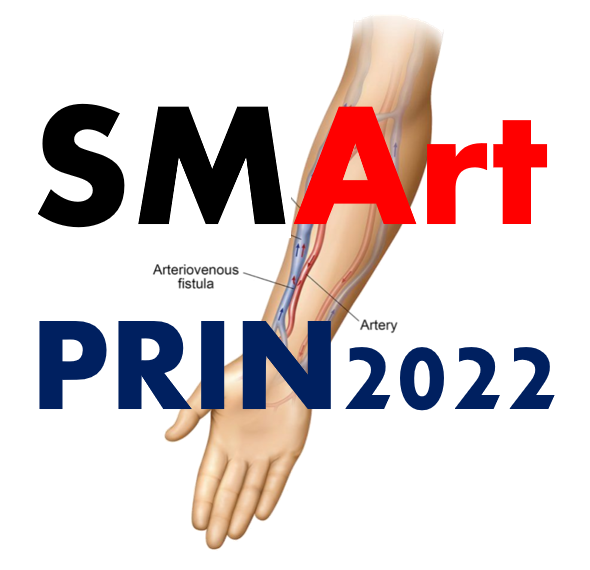
SMArt - Self-monitoring system for Arteriovenous fistula
Università degli Studi
della Campania
Luigi Vanvitelli
Università degli Studi
di Napoli
Federico II

Università degli Studi
di Salerno

Privacy
Follow Us


Contacts
Via Leonardo Bianchi c/o Ospedale Monaldi
80131 - NAPOLI
prinsmart@unina.it