


Body vibration sensors
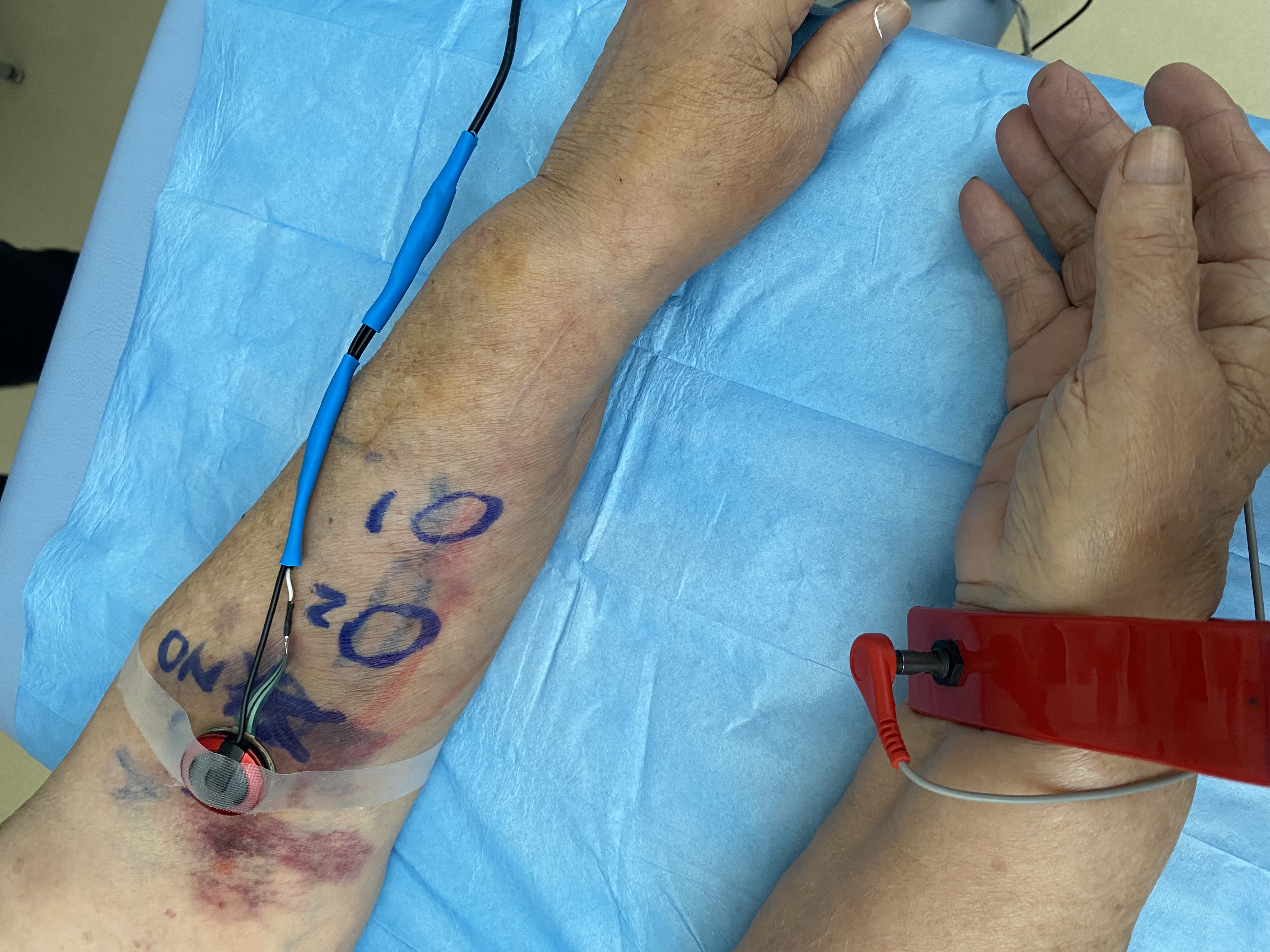
Innovative body vibration sensors have recently been proposed by the Biomedical Instrumentation Research Unit of the Federico II University of Naples and the Western Sydney University. They are able to record the very weak forces generated by the mechanical activity of organs and tissues inside the human body. These sensors have been successfully employed to monitor heart mechanical activity via the Forcecardiography (FCG) technique. FCG is a novel cardio-mechanical monitoring technique that measures the local forces induced on the chest wall by the mechanical activity of heart and lungs, by means of specifically-designed, piezoresistive and piezoelectric force sensors. Piezoresistive FCG sensors are based on Force Sensitive Resistors (FSR), which transduce changes in pressure exerted on their active area into changes in their electrical resistance. Piezoelectric FCG sensors consist of piezoceramic elements with innovative conditioning circuits that provide extended sensitivity down to very low frequencies. Piezoresistive and piezoelectric FCG sensors are mounted onto each other and equipped with a dome-shaped mechanical coupler, which ensures a good transduction of the forces originating from human tissues to sensor active areas. The size of the whole sensor can be as low as 1 cm2, and it can be easily applied to patients’ skin either by medical adhesive tape or by belts/bands wrapped around the target body part (if possible). When applied on a subject’s chest, FCG sensors capture respiration, infrasonic cardiac vibrations and heart sounds, all simultaneously from a single point on the chest. Similar body vibration sensors have also been investigated and used by the Biomedical Instrumentation Research Unit of the Federico II University of Naples to monitor muscle contraction via the Forcemyography and Mechanomyography techniques, and also to control various human-machine interfaces, such as hand prostheses and exoskeletons for assistance and rehabilitation. Very recently, the body vibration sensors have also been demonstrated for measurement of pulse waves on peripheral blood vessels, particularly from the fingers. Comparison with commercial Photoplethysmography sensors showed that body vibration sensors are able to provide extremely similar measurements of peripheral pulse waves. For this reason, these sensors stand as a suitable way to capture the mechanical vibrations produced by AVFs, both in infrasonic and acoustic ranges, thus giving a unique opportunity to simultaneously monitor pulse, thrills and bruit sounds produced by an AVF and acquire more comprehensive information about the health status of the AVF, as opposed to other devices and methods previously proposed in the scientific literature.
The following image shows the sensor that was realized and used.